
AI-Generated Listings vs Manual: An Honest Comparison
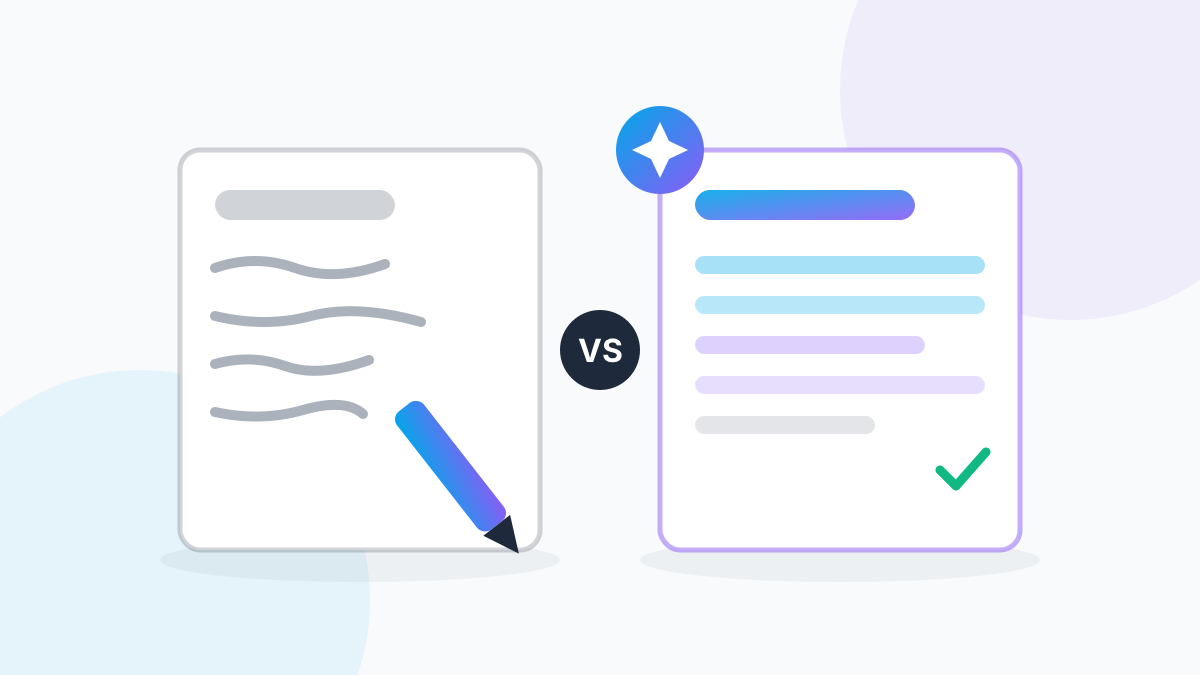
The eBay listing process hasn’t fundamentally changed in over two decades: take photos, write a title, craft a description, fill out item specifics, set a price, publish. For casual sellers moving a few items, it’s manageable. For resellers processing 50+ items weekly, it’s a time-consuming bottleneck.
Enter AI listing generators - tools that analyse your product photos and generate complete listings automatically. We build one, so you’d expect us to tell you AI wins at everything. It doesn’t. Here’s an honest look at where AI genuinely helps, where an experienced human still has the edge, and how to get the best of both.
Time: no contest
A careful manual listing takes real time - keyword research, a description written from scratch, item specifics filled field by field. Ten to twenty minutes per item is typical, and complex items like electronics take longer once you’re looking up specifications.
An AI-generated listing takes about as long as uploading photos and reading the output - a couple of minutes, most of it review. Even a hybrid approach (generate, then refine by hand) is a fraction of the manual time.
Scale that across a reseller’s week and the arithmetic is blunt: at 50 items a week, listing by hand costs you the better part of a working day compared to generating and reviewing. That’s time that could go into sourcing, shipping - or not working.
Titles: closer than you’d think
Where AI is strong: it reliably uses the full 80 characters, includes the model numbers and specifications buyers search for, and never forgets the basics - brand, size, colour. Consistency is the point: the hundredth listing is as thorough as the first.
Where humans are strong: niche and collector terminology, colloquial search terms, trending phrases. An experienced seller in a specialist category knows words an AI may not reach for.
Honest verdict: roughly a tie, for different reasons. AI gives you a keyword-complete baseline every time; a knowledgeable human can beat it in categories they know deeply.
Descriptions: structure vs personality
AI descriptions are well-structured, accurate to what’s visible in the photos, and professionally neutral - which also means they can read a little generic. Human descriptions bring personality and storytelling, but tend to be inconsistent in formatting and, in practice, often skip the specifications buyers actually wanted.
The best listings combine both: AI structure and completeness, plus a sentence or two of human voice - why it’s great, what you’d tell a friend about it.
Item specifics: where AI clearly wins
This is the quiet advantage that matters most. eBay’s filtered search runs on item specifics - those dropdown fields like Model, MPN and Compatible Model. Buyers filtering by them literally cannot find listings that left the fields empty, and manual listings skip them constantly, because filling them is tedious.
AI tools identify and populate these fields from your photos automatically. It’s not glamorous, but it’s the difference between appearing in a filtered search and not existing.
A well-specified, clearly described listing also tends to generate fewer “what size is it?” and “does it come with the charger?” messages - which means less time on customer service per sale.
So who should use what?
Casual sellers (a few items a month)
Manual listing is perfectly viable at this volume - but AI eliminates the blank-page problem that stops items being listed at all. The best listing method is the one you’ll actually use.
Side hustlers (20-50 items a month)
This is the sweet spot for the hybrid approach: generate every listing, then spend your saved time refining the ones with the most value at stake.
Full-time resellers (100+ items a month)
At this volume the time argument is decisive, and consistency compounds: complete item specifics across your whole inventory improves how the entire shop surfaces in search.
Where AI still falls short
Honesty requires this section:
1. It only knows what it can see. Provenance, service history, whether the thing actually switches on - context only you have still needs adding. AI can spot visible damage; it can’t test functionality.
2. Specialist categories have specialist language. In deep collector niches, review the terminology before publishing - human expertise still matters for high-value items.
3. Bundles and lots need a human hand. Multiple items in one listing is exactly where automated descriptions most need editing.
4. You are responsible for accuracy. Always read the output before publishing. It’s your listing, your buyer, and your feedback score.
The bottom line
AI assistance isn’t replacing sellers - it’s eliminating the tedious parts. The winning setup for most people is hybrid: let AI do the structure, keywords and item specifics in seconds, then add the judgement and personality no tool can supply. Spend your time where you add value, not where you fill in dropdowns.
Want to try the hybrid approach? SellFaster analyses your photos and generates complete eBay listings in seconds - optimised titles, detailed descriptions, and all item specifics - plus ready-to-paste versions for Vinted, Depop and Facebook Marketplace. It’s free to try, and you’ll see exactly what your listings will look like before publishing anything.